When I was told I had to develop an alternative interactive activity, the first thing I thought was that it would be easy peasy. But actually, I had to think a lot about different activities, develop them and adapt them to our class so that it would be something practical to carry out. But I've really enjoyed it looking for information and trying to find something interesting so that people get involved.
Here is a link to what my work has consisted in.
--
Cuando me dijeron que tenía que preparar una actividad diferente a las demás, lo primero que pensé fue que sería algo fácil de preparar. Pero, en realidad, tuve que pensar muchas actividades diferentes, desarrollarlas y adaptarlos a nuestra clase para que se hiciera algo llevadero. Pero he disfrutado mucho buscando algo interesante para que la gente participara.
Aquí tenéis un enlace para ver lo que he hecho en mi trabajo.
--
Jarduera desberdin bat egitea proposatu zidatenean, zerbait erraza izango zela pentsatu nuen lehenengo aldian. Baino jarduera asko pentsatu behar izan nituen, garatu eta klasera moldatzeko, jendeak parte har eta dibertigarria izan zezan.
Hemen nire lana ikus dezakezue.

lunes, 25 de abril de 2016

lunes, 18 de abril de 2016
LINKS
Next links talk about the actions the European Union take against climate change:
- This link is about the main page of the actions the European Commission: http://ec.europa.eu/clima/
lunes, 11 de abril de 2016
MY PART
My part in the work is a bit different from the others. I have to think about a distinct idea which is going to be more practical, but at the same time instructive. I asked my peers to help me make up something, and we came up with these ideas:
- planting trees
- cleaning beaches
- do banners concerning about things like saving water, electricity, energy... and putting them all over the streets and in our school
- avoid using contaminating vehicles
- concerning people about how animal abuse and meat industry affects us, the world, and the environment
I think all these activities could be very helpful to concern people about our very own world, but what I really would like to work on is animal exploitation and meat industry. This is a topic which really concerns me, because not only does it hurt the animals, but it also affects the human-being in general and destroys the environment. There are really good documentaries with very visual information which we could watch.
Before I prepare anything, I have to talk to my peers and see what they think, and with their help, choose the most efficient idea and put a dead-line to prepare it and carry our project through.
After discussing the subject, we have decided that we could be doing different activities to show people that it is not enough to learn about the climate change problem, but we also have to take action. We thought that we have to promote good habits among our fellow students, like: recycling, turning the lights off, not using vehicles that pollute... We are going to do these three activities:
- Do stickers about turning the lights off and sticking it next to the on-off switch in our school.
- Draw posters with visual images and stick them all over the school so that students as well as teachers can think about it.
- After doing that, we will go to some 4th level classes to talk to the students about our topic and see what they think.
We painted some posters abut tips to fight against climate change and we stuck them all around the school. You can see more information and pictures here. We will also do some stickers and stick them on each class next to the on/off switch to encourage students to turn off the lights.
For the talk on the 4th level classes, we have prepared a quiz for them, and a song tag, which consists in playing different songs we have chosen from different cultures of Europe, and see if they can guess where it is from. To play the quiz, we will divide the class into some groups (about 4 or 5) and turn it into a competition. The winner of the competition will win the sticker to stick it on their classroom.
We will be doing that on the 3rd of may in two different classes.
This is what we have stuck all around the classes from our school, explaining them that what they have to do is turn off the lights if they really want to save our planet.

So far, these are the activities we have done in our school about my part.
This is what we have stuck all around the classes from our school, explaining them that what they have to do is turn off the lights if they really want to save our planet.

So far, these are the activities we have done in our school about my part.
jueves, 3 de marzo de 2016
lunes, 29 de febrero de 2016
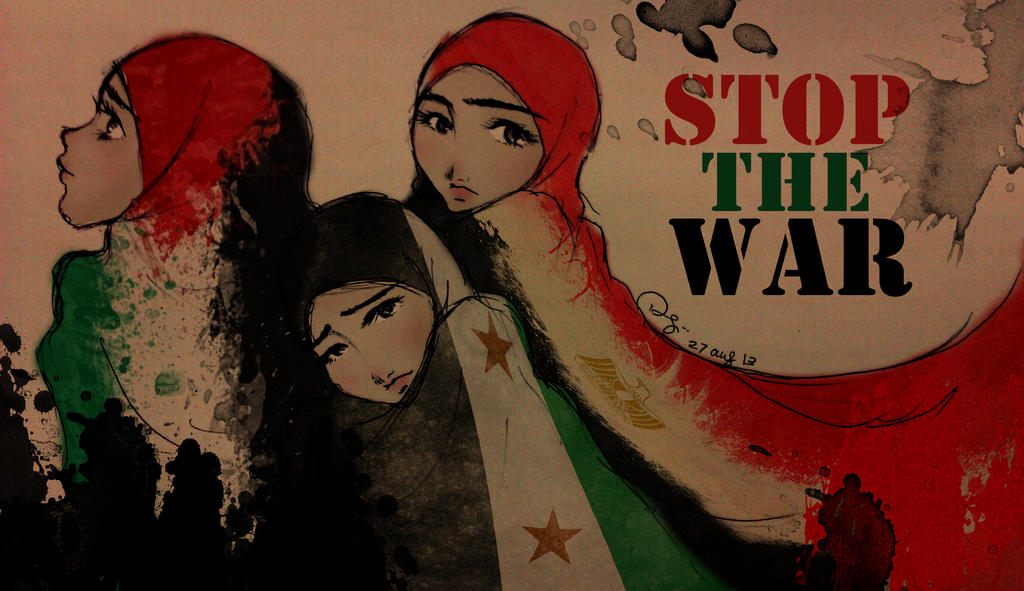
WAR
It is known that our world is constantly in war nowadays. But is it really worth it? Should we end it? Why?
It seems that people see violence as the only way to get what they want, either territories, or money, or power, or whatever they wish. We are in constant battle. But what would happen if that changed? If countries stopped bombing other countries?
There are several reasons to be in conflict with other countries (it could be a political matter, or capital, or geographical, or even religious), but, the way I see it, we should be able to solve our problems without violence. I know it is very hard, because we have grown with that ideology, but with a bit of determination, we could change the world and make it a better place to live.

jueves, 25 de febrero de 2016
PATRIARCHY AND WAR
Even if we are not aware of it, patriarchy has always been behind every political and military idea. Patriarchy, together with many other ideals (imperialism, religion or capitalism, for example), has lead to many wars and exploitation movements.
All of them lead to different causes, but at the same time, they have created
one patriarchal society with the same ideals that know only one only
way to solve everything: war and violence.
War means power. And power has been followed by the human being for centuries. It's just that, instead of human beings, males have been the only specie allowed to show the "strength" they own, forcing others to stay in the dark. This way, discrimination such as speciesism, racism or sexism have become very common among us. Each group tries to show off their strengths, but men are the ones to apparently be strong.
Under patriarchy, white men have disproportionate political, social and
economic power. Violence is male-dominated just as most aspects of
political and social life are controlled by white men.

lunes, 15 de febrero de 2016
SIRIAN SITUATION

Syrian Arab Republic, is a country in Western Asia, surrounded by Turkey, Cyprus, Iraq, Lebanon, Israel and Jordan.
 |
|
Petroleum in commercial quantities was first discovered in the northeast in 1956.
Since the ongoing civil war of 2011, Syria has been isolated from many countries
in the region and from all over the world, but they are getting help from countries such as Britain,
Canada, France, Italy, Germany, Tunisia, Egypt, Libya, the United
States, Belgium, Spain and the Gulf States.

Suscribirse a:
Entradas (Atom)